Role
UX Researcher & Designer with 3 Designers
Team
Tremoloo
Platforms
Web · Zoom Plugin
Focus
Usability testing platform
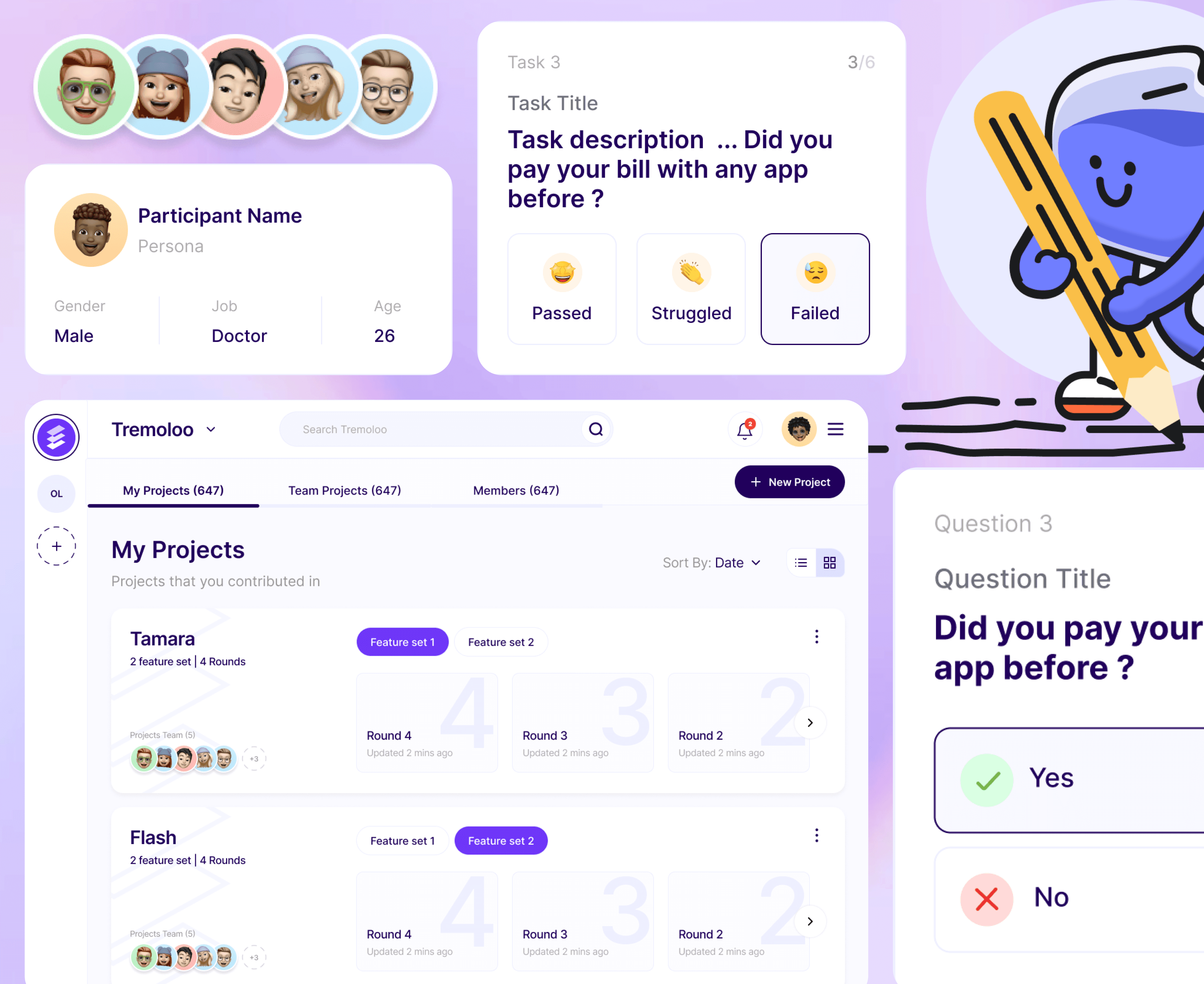


I worked on the UX and design across both the web platform and the Zoom plugin — ensuring the two experiences worked as one coherent system for the moderator running a live session.
01
Web platform
Designed the dashboard, project structure, and document navigation for moderators managing multiple testing rounds
02
Zoom plugin
Designed the in-session experience: participant cards, task navigation, issue tagging, and notes capture — all accessible without leaving Zoom
03
Information architecture
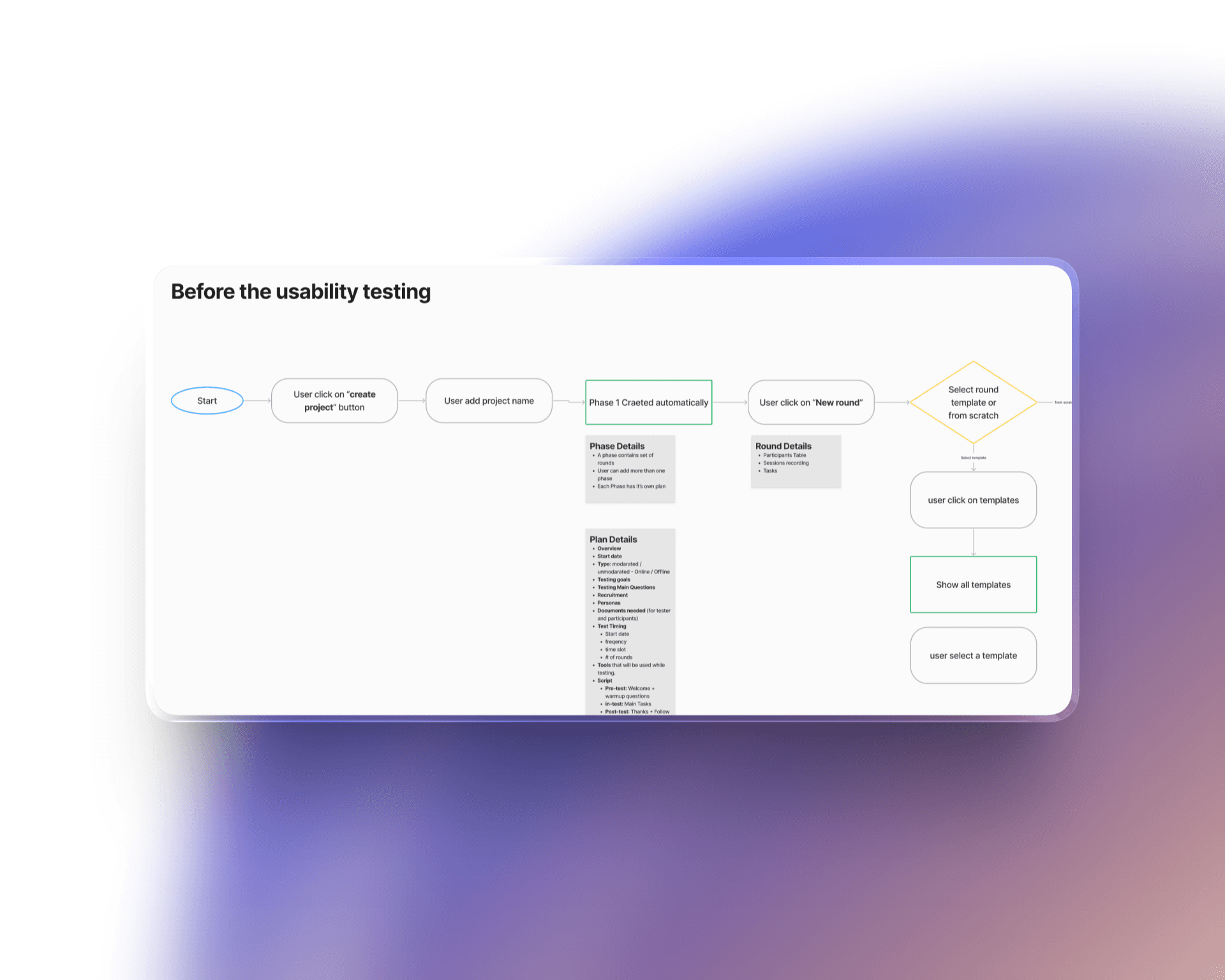
Defined how feature sets, rounds, participants, and tasks relate to each other across the platform
04
Client communication
Presented work and iterated based on feedback throughout


Familiar before functional. Moderators already knew Figma and Notion. The dashboard structure borrowed from tools they used daily — so the learning curve was close to zero. Familiarity wasn't laziness; it was a deliberate way to reduce onboarding friction for a tool people would use under pressure.
The plugin lives inside the session, not beside it. During a usability test, a moderator can't afford to switch tabs. The Zoom plugin puts the participant profile, current task, issue tags, and notes field all in one panel — visible while the session runs. Everything needed is one glance away.
Task cards that adapt to question type. Not all usability tasks are the same — some are pass/fail, some are open-ended, some require issue tagging. The task card changes its layout based on what the moderator needs to capture, so the right fields are always in the right place without scrolling or hunting.

One source. Every session.
01
Web dashboard Projects, feature sets, rounds, and participants — all organized in a structure moderators can navigate instantly. No rebuilding from scratch. No file hunting. The project is always where you left it.
02
Zoom plugin The full session experience inside Zoom: participant profile at the top, task card in the middle, issue tags and notes at the bottom. Moderators move through tasks, mark outcomes, tag issues, and capture notes — without ever leaving the call.
03
Adaptive task cards Each task card reflects the question type. Pass, struggled, or failed — one tap. Issue tags pre-populated with the most common usability problems. Notes section always available. The card does the structure so the moderator can focus on the participant.
04
Auto-generated reports When the session ends, the data is already organized. Reports generate automatically from what was captured during the session — no manual synthesis, no copy-pasting between tools, no hours lost to formatting.

Create. Test. Export.
What used to take multiple platforms, manual analysis, and hours of report writing became a single workflow — from participant setup to exported insights. Moderators run better sessions because the tool handles the overhead. Stakeholders stay informed because the data is always current.